Click in the box below to watch this short video & stay informed to help you make the best choices for your Breast Health.
News
Signs Of A Clogged Lymphatic System And Ten Proven Ways To Cleanse It

A major part of being healthy is to ensure that any toxins that enter our system are effectively identified by the body and escorted out in a harmless fashion. There are many systems, organs, and glands in place to make sure this occurs, but unfortunately, many of them have become clogged and compromised to the point of complete dysfunction. One of those important systems that aid in the removal of toxins and has become clogged in many ways, is the lymphatic system.
Purpose of the lymphatic system and signs it is clogged
The lymphatic system is a complex drainage or “sewer” system that consists of tissues, organs, glands, lymph nodes, spleen, thymus gland, capillaries, and adenoids. Its primary role is to cleanse our cells by absorbing excess fluids, fats, and toxins from our tissues and clearing them out of our body, as well as battling infections and transporting white blood cells and nutrients to where they’re needed most.
Unfortunately, due to our toxic burden, nutritional deficiencies, and relative inactivity, this system has become increasingly polluted. If you suffer from any of the following, it may be a sign your lymphatic system is clogged and needs a serious cleanse:
- Skin conditions
- Arthritis
- Unexplained injuries
- Excess weight or cellulite
- Headaches
- Chronic fatigue
- Sinus infections
- Digestive disorders
- Enlarged lymph nodes
If you identify with any of these conditions, you will want to strongly consider incorporating the following 10 factors to help cleanse your lymphatic system.
Exercise
If you have a toxic lymphatic system, the best approach is to start slow on the exercise, and be consistent. Think of the tortoise rather than the hare in the beginning and as you get more energy you can incorporate more vigorous and intense exercise.
One of the easiest, safest, and most profound exercise you can incorporate is rebounding. This is the simple act of lightly bouncing up and down on a “mini trampoline”, which is the perfect movement for stimulating lymph flow, and toning other detoxification organs as well.
If you don’t want to purchase a mini trampoline, brisk walking, jogging, and skipping rope are three other beneficial exercises to get the lymphatic system pumping.
Alternative treatments
If exercising isn’t in your wheelhouse yet, or you want to add on some additional body work, you can also consider alternative treatments that can get the lymph flowing.
A lymphatic drainage massage is one easy way to detoxify your lymph system as a skilled practitioner will stimulate circulation and drain fat, fluids, toxins, and other waste products away from your cells for proper elimination. Acupuncture, an ancient and effective TCM treatment, also helps open up pathways (meridians) in your body to help stimulate lymph flow and help remove toxins from the body.
An infrared sauna is also an excellent and easy option, as the sweat excreted through your skin can help release the toxic burden on your lymphatic system and allow it to work more effectively.
You can also use a vibration machine which will really stimulate the lymphatic system. Due to it’s effectiveness, you’ll want to go at it slowly at first so as to not stimulate too much toxin removal in a short period of time that may create undesirable symptoms.
Hot and cold showers
Although it may seem a little sadistic, a hot and cold shower has merit when it comes to benefiting the lymphatic system. The hot water increases blood flow to the surface of the body and cold water drives blood to the core of the body. This creates an “accordion” effect that increases blood flow and speeds up circulation, while bringing fresh oxygenated blood and nutrients to organs and glands which helps take away toxins and pathogens.
This process can reduce build up of fluids and ease inflammation, as well as allowing the immune system to attack any foreign pathogens in the fluid. It can also break down cancerous growths in the lymphatic system by improving circulation and detoxification, which then allows these growths to be removed from the body.
The first step to using this method is to ensure your shower water is pure, so make sure you have a good filtration system in place. Next, you can get extra benefits by using a natural bristle skin brush to gently exfoliate your skin prior to entering the shower. Lastly, make sure to try this technique very slowly at first, and discuss with your medical doctor prior. Since the hot and cold can put stress on your heart and cardiovascular system, it may be contraindicated for those with serious heart conditions. Listen to your body and slowly build up your hot and cold tolerance to the full routine, if possible.
Hot and Cold Shower
- Get in the shower and get completely wet at a temperature that is completely comfortable for you.
- Slowly increase the temperature to the point you can barely stand it. Expose all areas of the body to this hotter water, including the top of your head and your face. Do this for a minimum of 30 seconds and up to 2 minutes for more effect.
- Now turn the water down to the coldest tolerable setting, and expose all areas of the body to this colder water. Do this for a minimum of 30 seconds and up to 2 minutes for more effect.
- Repeat this alternating hot and cold exposure 5 times or more, always ending with cold.
At first, your hot and cold tolerance may be minimal, and it is important to honour your extremes in the beginning. However, you should work on building up to hotter and colder temperatures to increase your tolerance and the health benefits of the routine.
Since your lymph system has no central pump of its own (unlike the heart), this therapy and others which stimulate this type of action are great solutions to get it flowing properly again.
Use dry brushing
Dry brushing is a technique that has been long used in Ayurveda, and is a powerful and very economical healing therapy. It helps remove dead skin cells and opens your pores, as well as stimulating the movement of your lymphatic fluids. To do it effectively, use the following technique:
- Beginning with the feet, and moving up the legs, brush toward the heart. You want to use long, sweeping motions — not scrubbing or back and forth movements. Don’t brush so vigorously that the skin is red or irritated. For the stomach area, brush counterclockwise. Next, focus on your backside with upward strokes. End the session with the hands, arms and chest. Avoid delicate areas like the face. Remember, both the skin and brush need to remain dry for the entire session.
You should try to dry brush your skin at least once a day, with each session lasting between 2 and 20 minutes. Before your morning shower is ideal. Look for a natural, stiff-bristled brush with a long handle for reaching tricky areas like on your back.
Drink adequate amounts of clean water
You’ve heard it before – drink your water! However, I must point out that if you don’t properly source your water, you’re actively adding to your toxic burden by ingesting easily absorbed toxins often present in water such as fluoride, chlorine, VOC’s, xenoestrogens, and more. You can avoid these toxins by not using tap and plastic bottled water, and using only distilled, reverse osmosis, filtered, or clean spring water.
Once you have a clean and well-mineralized source of water, then you can safely consume up to half your body weight in ounces of water a day (160 lbs = 80 ounces of water). If you eat plenty of hydrating foods like raw fruits and vegetables, that will also assist with your overall water intake.
Remember, you are up to 75% water and it is very important for lubricating and cleansing the body. Use it wisely, and your lymphatic system will ultimately benefit.
Avoid restrictive clothing
It’s important to not wear tight clothing that can cut off proper circulation within the lymphatic system. This can cause blockages to occur and toxins to build up in different areas of the body.
Areas of particular importance where this may occur is bras for women that may be too tight in the axillary lymph node area (armpit area), and in the inguinal lymph node area (groin) where tight fitting underwear could cause a problem over time. Bras with underwires are especially problematic due to their constriction of lymphatic flow.
It’s fine to wear something tight from time to time, but avoid being excessive and keep the bra off as much as possible. If you must wear one, consider a bra that doesn’t contain an underwire to improve the flow dramatically.
Deep breathing
Another method of “pumping” lymph properly comes from deep breathing. Since our bodies have 3x more lymph fluid than blood, this exercise becomes increasingly important in order to get the toxins into the blood so they can be detoxified by your liver and kidneys.
An excellent way to improve deep breathing is to do yoga or meditate on a regular basis. Both these practices emphasize long, deep, and highly oxygenating breaths which will be of tremendous benefit to your lymphatic system and overall health. It will also help improve your mental state, which always results in more natural and healthy breathing.
If you need a place to start, breathe deeply in through your nose for 4 counts, and exhale through your mouth for 2 counts. As you get better, increase the amount of time by breathing deeply through your nose for 5 counts, hold for 10 counts, and exhale for 5 counts. This may seem awkwardly slow at first, but it will leave you feeling very refreshed after you are done.
Eat foods that promote lymph flow
Eating a clean, nutrient rich, and mostly raw food diet rooted in produce is the first step to promoting healthy lymph flow. Some particularly cleansing foods that promote lymphatic flow include:
- Dark leafy greens
- Low sugar fruits
- Garlic
- Ground flaxseed
- Seaweed
- Algae
- Chia
- Avocados
- Cranberries
- Walnuts
- Brazil nuts
- Almonds
These types of foods will help provide the necessary vitamins, minerals, EFA’s, and enzymes to cleanse your lymphatic system more efficiently.
Avoid foods, personal care products, and environments that cause lymph stagnation
Half the battle of cleansing your system is providing it with enough power to do so, and that can’t be accomplished if you keep polluting your body with a variety of toxins. This means avoiding conventional personal care products loaded with parabens, petroleum, and phthalates, like deodorants, lotions, make up, and sunscreens.
With respect to the environment, staying out of heavily polluted outdoor areas as much as possible is critical, and opting for more oxygen rich environments like parks, forests, lakes, and beaches is imperative. Your indoor environment is just as important if not moreso, so use plants, essential oils, and air purifiers to keep the air as clean and fresh as possible.
In addition to that, avoiding the following foods are critical to improving your lymphatic health:
- Sugar
- Artificial sweeteners
- Conventional dairy
- Conventionally raised meat
- Refined grains
- Processed foods
- Soy
- Preservatives and additives
- Table salt
- Baked goods
Take herbs that stimulate lymph flow
Herbs are great natural stimulators, and when used appropriately can be very useful for kickstarting various areas of the body. Your lymphatic system is no different.
Some great herbs to consider for teas, juices, and more include:
- Echinacea
- Astragalus
- Goldenseal
- Wild indigo root
- Red clover
- Pokeroot
- Parsley
- Cilantro
As with most chronic conditions, a multi-faceted lifestyle approach is often the only way to do a proper clean up of any system, and that goes for the lymphatic system as well. So be sure to layer in all of these factors for a much more comprehensive cleanse, and enjoy the improved health that comes with rejuvenating a clogged lymphatic system.
Why You Should Consider Breast Thermography

Breast thermography is a non-invasive, painless and radiation-free way to receive breast thermal findings assessment. Thermography uses digital infrared imaging to measure skin temperature and when properly applied to breast examinations changes can be used to assess subtle changes and anomalies in the breast. One reason more women are opting for Thermography as an adjunctive breast assessment is that is is “non-compressive,” which means that it doesn’t squeeze or put force on the breast, as might occur during x-ray mammograms.
In addition, Breast Thermography is helpful way to in monitor physiologic changes that can occur with hormonal imbalance, lymphatic edema, ductal congestion, chest wall pain syndromes, and angiogenesis.
An Effective and Radiation-Free Tool to Monitor Your Breast Health
Breast Thermography is not meant to be a replacement for x-ray mammograms, but it has been shown to be an effective adjunct therapy that can provide vital insights into your overall breast health. Thermography is gaining increased recognition for its ability to spot physiologic changes within breast tissues years before x-ray mammograms can detect structural changes.
Similar to how high blood pressure screening is a risk assessment for vascular disease Breast Thermography is a breast thermal findings assessment for breast disease. And when combined with other clinical diagnostic tools, it can help to distinguish between benign, early, advanced and progressive disease.
How does it work? Thermography is able to effectively measure and map even subtle breast circulatory and temperature changes in the skin. For example, sex hormones, such as estrogen and progesterone, are known to affect breast circulation and physiology. That’s why several studies have shown that Thermography can monitor the effects of hormone replacement therapy, and the treatment of conditions like fibrocystic disease. It’s also enormously helpful for evaluating several musculoskeletal conditions that can impact breast health, lymphatics and associated breast and chest wall pain.
Breast Cancer Detection
The reality is that no assessment tool (including x-ray mammography and ultrasound) provides 100% accuracy for breast cancer detection. However, combining Thermography with other diagnostic tools can provide your doctor with additional physiologic information that can be used for clinical decision making. No matter what study you and your doctor choose to monitor your breast health there is no question that using different studies together provides more information than using any study alone.
Here’s how it works…..
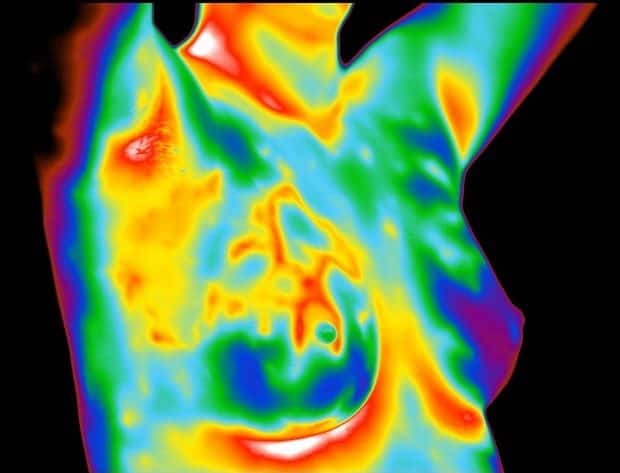
When breast tissue abnormalities exits blood flow can be altered to that area. In most, but not all cases, abnormalities are associated with increased blood flow. As a result, skin temperature in the involved areas increases compared to surrounding normal tissues. Breast thermography is able to detect those temperature changes. Additionally, if there are newly formed or engorged blood vessels, Thermography can detect those changes as well.
By closely observing breast tissue with infrared imaging, critical early changes in blood flow can be detected, along with other potentially dangerous changes.
And since highly sensitive thermal imaging is able to detect even subtle changes on the skin surface it can often detect potential abnormalities years before any structural findings become present. Just like having high blood pressure does not mean you will have a stroke having findings consistent with increased risk on breast thermography is not a good sign. Likewise, while you can have a stroke even though your blood pressure was under good control the presence of a normal thermogram does not mean you cannot have breast disease. In both instances however everyone wants to lower their risk assessment profile and for breast disease breast thermography can be a wonderful too to help do just that.
The Science is In!
While the role of breast thermography in cancer detection is still debated, more and more studies have supported its validity. Take a look at this recent study https://pubmed.ncbi.nlm.nih.gov/32613403/ The study concluded that Thermography is a valuable assessment tool espically in women with dense breast tissue.
Another study published in the American Journal of Radiology concluded that Thermography is a safe, non-invasive procedure, which is highly valuable as an adjunct to x-ray mammograms in determining whether a lesion is benign or malignant.
Today, Thermography is playing an increasingly important adjunctive role in clinical diagnosis, and in distinguishing between benign, early, advanced, and progressive diseases.
Don’t Neglect Your Breast Health! Call today to schedule in an appointment Ph: 086 1623683
Lymphatic Congestion & Breast Health
Our body is complex. When it comes to your breast health, an important, yet overlooked factor is how well fluids are circulating to and from your breasts. Not just blood, but also the fluids from your lymphatic system. Ensuring you are receiving a safe yearly assessment with the use of thermography is so important to help prevent the development of Breast Cancer. Helping you understand the connection between lymphatic congestion and breast health, is an important piece of the puzzle. A Breast Thermography assessment can help assess the lymphatic & breast tissue.

Throughout your body is an entire system of lymphatic tissue, the majority of which is found beneath your skin and within the digestive system. Though, often overlooked in the prevention and treatment of disease, the lymphatic system is a key component of your immune system. It identifies foreign invaders and helps launch an immune response to kill infection agents. It’s also an important part of detoxification, and it serves to remove toxins and waste products from your skin, organs, glands and other tissue. The toxins are then sent to the liver to be processed further and thereby eliminated.
Your breasts have a vast network of lymphatic channels that can easily accumulate substances that are fat-soluble. Hormones like estrogen or toxins that mimic estrogens in a way that is detrimental to your breast health; heavy metals and organic pollutants such as BPA, pesticides and phthalates all have a way of causing lymphatic congestion.
If all these toxins accumulate in your breast, normal cell function can become compromised. This in turn promotes abnormal cell function, hence, it then becomes more likely that cancer will develop.
Nowadays, breast cancer is the most frequent malignancy in women, with an incidence of 35-44 new cases per 100,000 women/per year, and its frequency is increasing.[i] When we conduct a thermogram on your breasts we are able to see areas that could be of concern, and thermograms also detect lymphatic congestion.
Some of the things that cause lymphatic congestion are:
Anti-Perspirants: Sweat is one way the lymphatic system eliminates toxins. By blocking sweat glands with anti-perspirants, toxins will accumulate.
Ill-fitting bras/bras in general: Bras can compromise your circulation. When you do where one, make sure you’ve purchased a bra that has been correctly sized by an expert.
There are many other ways you can avoid and help eliminate congestion, and one way is through Manual Lymphatic Drainage. Manual lymphatic drainage (MLD), sometimes called manual lymphatic therapy, uses light touch to move excess lymph and fluid out of the tissues and back into the lymphatic vessels. Although often referred to as a type of massage, MLD is very different from traditional forms of massage that rely on deep and rigorous rubbing. MLD is much gentler and should feel as if the skin is being brushed, not rubbed or kneaded.
We highly recommend that you schedule an appointment with a Massage Therapist skilled in lymphatic drainage.
At Thermography Clinic Ireland, we utilize sophisticated infrared technology and innovative computer software to capture the images in the form of an infrared thermogram, or heat picture. All reports are interpreted by Dr Alex Mostovoy, Board Certified in Thermology.
Before you can feel it, thermal imaging can see it. Please call our office Ph: 086 1623683 to schedule your Breast Assessment today.
[i] https://www.ncbi.nlm.nih.gov/pmc/articles/PMC3065438/
What Does It Mean to Have Dense Breasts?
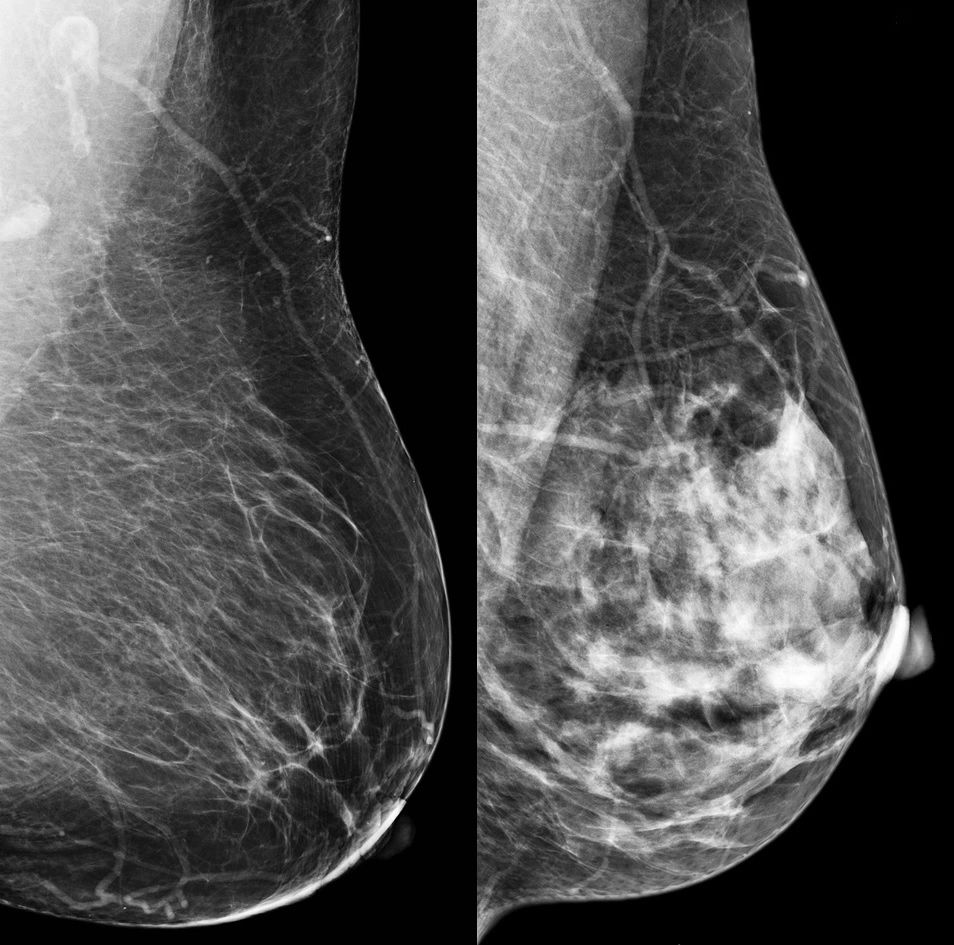
A mammogram will reveal your level of breast tissue density. Have you had a mammogram? Do you know your level of density? It is critical for women to know their density level because “Women with dense breasts have a higher risk of getting breast cancer! If you have dense breasts, then a mammogram will NOT find a tumor in the early stages. It’s like trying to spot a golf ball in a snow storm. (see the images below)
What Are the Parts of the Breast?
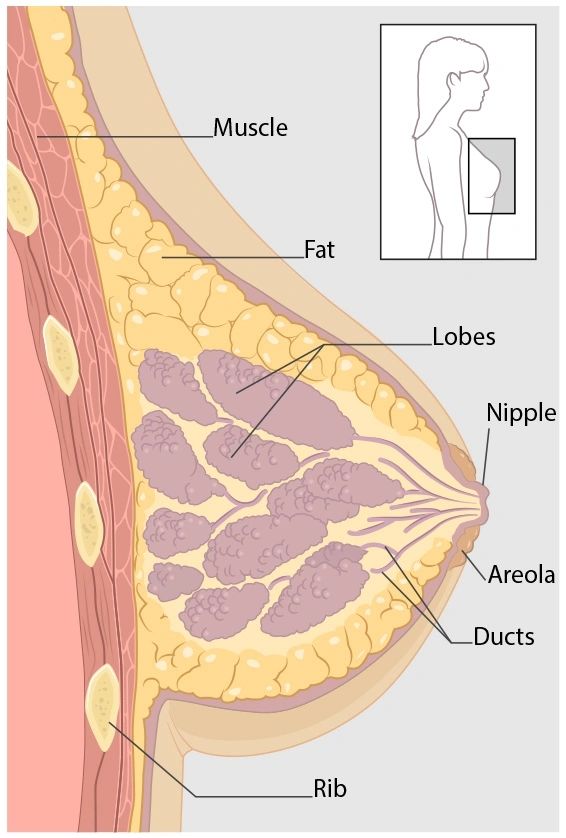
A woman’s breast has three kinds of tissue
- Fibrous tissue holds the breast tissue in place.
- Glandular tissue is the part of the breast that makes milk, called the lobes, and the tubes that carry milk to the nipple, called ducts. Together, fibrous and glandular tissue are called fibroglandular tissue.
- Fatty tissue fills the space between the fibrous tissue, lobes, and ducts. It gives the breasts their size and shape.
What Is Breast Density?
Breast density reflects the amount of fibrous and glandular tissue in a woman’s breasts compared with the amount of fatty tissue in the breasts, as seen on a mammogram.
On a mammography report, breast density is assigned to one of the following four categories—
- The breasts are almost entirely fatty (about 10% of women).
- A few areas of dense tissue are scattered through the breasts (about 40% of women).
- The breasts are evenly dense throughout (about 40% of women).
- The breasts are extremely dense (about 10% of women).
Women in the first two categories are said to have low-density, non-dense, or fatty breasts. Women in the second two categories are said to have high-density or dense breasts. Almost half of women who are 40 years old or older have dense breasts.
Why Is Breast Density Important?
The image on the left shows a mostly fatty breast, and the image on the right shows a dense breast.
Breast Cancer Risk
Women with dense breasts have a higher chance of getting breast cancer. The more dense your breasts are, the higher your risk. Scientists don’t know for sure why this is true.
Breast cancer patients who have dense breasts are not more likely to die from breast cancer than patients with non-dense (fatty) breasts.
Mammograms
Dense tissue can hide cancers. Fibrous and glandular tissue looks white on a mammogram. So does a possible tumor. Because it’s hard to tell the difference between a tumor and dense breast tissue on a mammogram, a small tumor may be missed.
Who Is More Likely to Have Dense Breasts?
The density of your breasts can change over time. Generally, you’re more likely to have dense breasts if you—
- Are younger.
- Are pregnant or breastfeeding.
- Are taking hormone replacement therapy.
- Have a lower body weight.
What Should I Do If I Have Dense Breasts?
Dense breasts are just one of several risk factors for breast cancer. Consult with your health care professional and request other follow-up screening tests if you have a high level of dense breast tissue.
Different tests are available that can reveal high levels of concern showing a disease in process that can be missed on a mammogram. Keep in mind that no screening test is 100% and that “False Positive test results can lead to other invasive and unnecessary testing, like a needle biopsy.
Your doctor should suggest one of these other tests if you have dense breast tissue;
- Breast ultrasound – A screening tool that uses sound waves to make detailed pictures, called sonograms. Safe with NO radiation.
- Breast thermogram – Medical thermal imaging without radiation, compression, or physical contact.
- Magnetic resonance imaging (MRI) – A scan that uses a magnet linked to a computer. The MRI scan makes detailed pictures of areas inside the breast, and may also use contrast to determine if a lump is malignant. Always consult with your health care professional about the pros and cons of your options.
Learn Valuable Information About Improving Hormone Balance & Breast Health
Watch the replay of Dr Alex Mostovoy as he discusses Women’s Health Issues and Breast Cancer Prevention. HERE is a link to watch it. Please feel free to share it as well.
Come away with practical tools that can make an immediate difference:
- Learn how you can manage and improve your feminine health…
- Find out what might be in the way of losing weight…
- Discover one of the least known contributors to breast disease, and how to prevent it
- And more..,


