News

What Is Thermography?

Breast Health Discovery vs. Disease Detection

​Every person deserves the truth about their state of health. Instead of waiting for symptoms to manifest and a disease process to be diagnosed, Thermography gives you a very early look at the most important indicator of a potential health problem – Inflammation.

Thermography uses an infrared camera that measures the surface temperature of your skin to detect patterns which may indicate the need for further clinical evaluation.

Thermography -_ Truely Is Abount Breast Cancer Prevention

Instead of disease detection, we call Thermography “Health Discovery” – a very important part of your Breast Health Protocol . Thermography detects inflammation, often long before you may feel any symptoms or be diagnosed with an actual disease. In a nutshell, Thermography can see your body asking for extra help. It’s somewhat like a window that allows us to see in and get a visual, or as Dr. Carol Chandler in Lakeland Florida says it is “eavesdropping on what the body is prioritizing right now””Humans are famous for waiting until symptoms get so bad they finally act on them. At that point, there is probably little room for prevention – only Reaction – leaving them with no choice but to endure invasive testing, drugs with side effects plus treatments and surgeries that greatly reduce quality of life. However on the Proactive side, we can support your body’s ability to heal itself through various modalities like diet changes, supplementation, stress management, exercise and more… All designed to return you to a healthy state of well-being.”

So that leads you to wonder…
How Can Thermography Really Help Me?

If you’re wondering how Thermography will specifically help you better achieve your health goals, let me reassure you:
There are a number of areas in which Thermography will help you better understand your body. But it specializes in:

  • Breast Imaging
  • Pain Diagnostics
  • Early-Stage Disease screening


Yes, it’s true. Thermograms provide you with early screening and treatment assistance in such conditions as cellular changes that could potentially lead to cancers, inflammatory processes, neurological and vascular dysfunction, and musculoskeletal injury.

“But How are Thermograms Different From Mammograms?”

Mammograms look at anatomical changes in the breast, as they detect masses or lumps in the breast tissue. On the other hand, thermograms look at vascular changes in the breast, as they detect blood flow patterns, inflammation and asymmetries.

Thermograms benefit all women. They are ideal for young women who want to monitor their breast health before the recommended age of 40. Actually, your breast cancer prevention should start as early as possible.

One in Eight Women Will Be Diagnosed with Breast Cancer at Some Point in Their Life

Proper breast self-exams, physician exams, and now Thermography in conjunction with other testing ,together, provide you with the earliest detection system available.

Thermal imaging detects the subtle physiologic changes that accompany breast pathology, whether it is cancer, fibrocystic disease, an infection or a vascular disease.

From there, annual  thermograms allow you to map changes in your body’s heat patterns over time. They can alert you to any deviations from your norm. Mapping your health annually helps you detect changes, often before disease develops.

Yet breast imaging is only one benefit of thermograms. Another area that can be of benefit to both sexes is pain analysis…

Thermography screenings can assess and detect inflammation in the carotid arteries (which may be a precursor to stroke and blood clots). When inflammation and/or occlusion of the carotid is visible, your doctor may do additional testing. Earlier detection of a heart problem may save your life.

If you’ve never heard of Thermography, you may wonder how credible it is. The equipment used is calibrated to measure to 100th of a degree centigrade. Thermographers are trained to exacting standards and must pass several tests plus keep current with continuing education. Your scans are actually analyzed and reviewed by certified medical doctors who’ve specialized in thermography.

Is There a Link Between Hormonal Imbalance and Breast Cancer?

Is There a Link Between Hormonal Imbalance and Breast Cancer?

There is a clear increase in a woman’s chances of getting breast cancer as they age, in particular once they get into their 40′s, 50′s and beyond. Why would there be such an increase in breast cancer rates in women at this age? What is the significance of this time in a woman’s life?

Hormone Imbalances and Estrogen Dominance

During this time, a woman is likely experiencing hormonal imbalance as she enters peri-menopause, and eventually menopause. The primary reasons for this imbalance are:

  • declining levels of progesterone that occurs with aging, surgical removal of the ovaries or excessive stress (high cortisol equals low progesterone)
  • higher levels of estrogen as the body struggles make an egg from aging ovaries
  • accumulation of environmental hormone disruptors in the body from a lifetime of exposure to pollutants, plastics and pesticides (all contain xeno-estrogens)
  • use of oral contraceptives (past or current)
  • synthetic hormone replacement therapy
  • an unhealthy digestive tract (where hormones are removed from the body)

These factors can contribute to an excess of estrogen in the body known as Estrogen Dominance.  Since estrogen stimulates cell growth, a predominance of it, especially in the absence of adequate levels of progesterone, presents an increased risk of cancer, particularly in the breast.

Don’t get me wrong, estrogen is not a demon!  It is all about balance.  

  • The key takeaway here is that having Hormonal Imbalance may result in more breast stimulation and potentially increase the risk of developing Breast Cancer.  

Know The Symptoms of Hormone Imbalance:

  • Unwanted weight gain/inability to lose weight
  • Premenstrual weight gain/bloating
  • Heavy/painful periods
  • Irregular bleeding
  • PMS
  • Tender and/or fibrocystic breasts
  • Mood swings
  • Low Libido
  • Depression
  • Low thyroid symptoms
  • Sleep disturbances
  • Fatigue
  • High stress
  • Belly fat
  • Low immunities/susceptibility to illness

What Can I Do to Prevent / Treat Estrogen Dominance?

First, I recommend testing the testing l use is HTMA coupled with a specific blood panel, l use this testing to establish the Root Cause of the imbalance. This enables me look at Thyroid, Adrenal, Blood Sugar Handling, Liver and Gut function. No assessment of Hormonal Imbalance can be made without looking at all the above.

Finally, consider having a Thermogram.  This is a form of breast imaging that does not require exposure to radiation.  Instead, it measures the heat released from the breast, which indicates areas of increased cellular activity/growth.  A Thermogram can identify problems in breast tissue years before they can be seen by a mammogram or felt by your doctor.  A Breast Thermography can be the first indication that a hormone imbalance exists adn is impacting the Breast Tissue negatively.

Other Important Steps to Take Include:

  • Reduce the use of pesticides, pollutants, and chemicals in your home
  • Eat organic foods that are free of hormones and pesticides
  • Maintain an ideal body weight (excess fat increases estrogen production)
  • Exercise regularly
  • Find ways to better manage your stress

For more information about managing estrogen dominance, Breast Cancer prevention and any other health issue. Please contact Ph: 086 1623683 or www.Thermographyireland.ie

BREAST HEALTH

The first step in promoting good breast health is knowing your normal. 

Breasts come in all shapes and sizes and can change in many ways throughout the course of your lifetime – through puberty, pregnancy, breastfeeding, menopause, and aging.  But even from month to month your breasts may feel differently due to your menstrual cycle.  The more aware you become of your breasts’ unique and changing characteristics, the easier it will be for you to pick up on something that needs to be examined.

Breast health isn’t something you should just think about during your annual checkup – instead, make sure your breasts get the attention they deserve every day. Proactively taking care of them is easy and should be part of your overall health regimen.

Breast Health Tips

Here are some simple things you can do to promote breast health. (The girls will thank you!)

The Right Bra Matters.
Most women are not wearing a bra that fits properly so lymphatic drainage is impeded, interfering with cellular health. Have a bra expert measure you, especially if you have recently gained or lost weight, had a baby, or have been breastfeeding. A bra without underwire support allows for less pressure on the breasts when exercising, it’s important to wear a sports bra. Repeated bouncing and movement can cause your breasts to stretch and sag and it can also cause pain.  The best choice is a sports bra that compresses and encapsulates your breasts to combat both up & down and side to side movements.

Eat clean.

Violet_Site_R5_VD_BreastHealth_CA_20140710_03-2

Eating fresh, whole foods – as close to their natural form as possible – will help you avoid estrogen-like compounds found in food packaging plastics, additives, canned foods/drinks and soy products, which have been linked to an increased risk of breast cancer. Some great “clean” choices include: broccoli, beans, plums, walnuts and salmon. 

Drink more water.
Everyone knows there are tons of benefits to staying hydrated. But you should know that coffee, tea, soft drinks, wine, and beer all contain methylxanthines – chemicals that trigger the increased production of stress hormones. These hormones are linked to breast lumps and tenderness, and studies show that reducing or eliminating such drinks – and replacing them with good old H2O – can diminish symptoms.

Don’t smoke.
Smoking has been linked to a variety of chronic health problems. Women who smoke have a 30% higher risk of breast cancer than women who never smoked.

Give yourself a massage.
Breasts benefit from proper circulation and what is called “tissue mobilization” for optimum health – a regular self-massage can increase circulation and help break up fibrous tissue. Try 50-100 light circular motions in each direction over the breast tissue and gently rub over the entire breast and underarm area to circulate the lymph glands and restore the flow of energy.

De-Stress and Exercise.

Violet_Site_R5_VD_BreastHealth_CA_20140710_06-1

Find a way to relax and release stress every day using exercises like yoga or meditation.  Incorporate a few “chestercises” to keep your chest in shape:

  • Push-ups: Traditional or with knees bent, push-ups use your bodyweight as resistance to strengthen the chest. You can also do this against a wall.
  • Palm press: Feel the pressure in your pectoral muscle when you press palms together and hold five-seconds. Repeat 10+ times.

Breastfeed.
Breastfeeding has been shown to have numerous long-term benefits to mothers including optimizing metabolic function, less risk of osteoporosis, and less risk of reproductive cancers.

Stand up straight.
Hunching your shoulders can lead to a loss of flexibility in the chest muscles resulting in sagging over time.  Stand and walk straighter – you get the added benefit of breasts that instantly look bigger and perkier.

Perform routine breast self-exams (BSE). 
Self-examination takes just a few minutes and can be a critical step in maintaining breast health. The best time to perform a BSE is after your period when swelling and tenderness are at a minimum.

Consider Breast Thermography

Thermography is a non-invasive, radiation-free assessment of breast tissue. Changes in function happen years before a tumor or mass will be detected by structural testing such as a mammogram. Thermogrraphy may be the first signal that such changes are occurring in your body, and coupled with this information relevant changes in diet, lifestyle etc… can be undertaken to prevent disease occurring. Thermography is truly about prevention.

While most breast changes are benign, you should investigate if you notice nipple discharge, rashes, lumps, thickening of the skin, changes in size or shape of your breasts, inversion of the nipple or pain in the breast or armpit areas.

If you have breast tenderness, swelling, aches and heaviness with your menstrual cycle, you might have fibrocystic breast condition—a very common condition which affects approximately 50% of women during childbearing years.  While you may have always accepted this discomfort as normal, it no longer has to interfere with your daily activities.

Breast Thermography an Invaluable Assessment Tool

Breast Thermography is an assessment tool we offer at Thermography Clinic Ireland. It is a safe, non-ionizing, non-contact study of breast skin temperature that is useful as a breast health risk assessment.  It has particular utility in monitoring the effects of breast hormone therapy.  It is also useful as in the detection of physiologic changes such as hormonal imbalance, lymphatic edema, ductal congestion, chest wall pain syndromes,  and angiogenesis.  Internationally peer reviewed Guidelines for Breast Thermography have been developed by the American Academy of Thermology in 2012 and restated in 2013.  These guidelines support breast thermal imaging as a breast risk assessment, not unlike high blood pressure screening for vascular disease.

Thermography measures, images and maps microcirculatory shunting associated with breast circulatory changes in the skin. Sex hormones, in particular estrogen and progesterone, can affect breast physiology and circulation.  Serial studies are helpful in monitoring the effects of hormone replacement therapy and the treatment of fibrocystic disease.  There are several musculoskeletal applications that impact breast lymphatics, health and associated pain as well.

 The role of Thermography in cancer detection is frequently misunderstood and deserves special attention.

Angoiogensis has been called a breast risk health assessment as cancer cells need increased blood flow (angiogenesis) in order to “take” over surrounding breast tissue. They also have an increased metabolic rate, which translates into an increase in temperature compared to surrounding normal tissue. By studying breast tissue with infrared imaging early changes in blood flow can be detected and progressive changes can be assessed over time.

In 1997 Gamagami, Silverstein & Waisman published that

  1. Angiogenesis was the first sign appearing on mammography before the appearance of image of breast cancer, predicting in 91 % of the cases which breast might develop breast carcinoma. This is an important finding in the detection of the early stages of breast cancer development.
  2.  Infrared imaging goes hand in hand with mammography. Hypervascularity and hyperthermia could be shown in 86% of non-palpable breast cancer. In 15% it helped to detect the cancer upon an unsuspicious image on mammography.
  3. Infrared imaging was found to be the only test showing the efficiency of chemotherapy in inflammatory breast carcinoma.

There was also a 95% negative predictive value, and a 24% positive predictive value. It has been argued that this means if an Infrared Thermogram is negative there is a 95% chance that there is no cancer and that if it is positive than there is a 24% chance that cancer may later be discovered.

Infrared Thermography is a valuable adjunct to X-ray mammography and ultrasound, especially in women with dense breast tissue.  Other indications include small breasts, post implant breasts, post mastectomy breasts, those looking for additional information, and to follow the effects of treatment.

Thermal imaging is an examination of physiology that is complimentary to anatomical imaging techniques. Although proven to be highly accurate, thermal imaging is an adjunctive procedure; and as such, it is not intended to replace anatomic studies such as mammography, ultrasound, MRI, CT, X-ray, or others.

Example Breast Thermography Protocol Images:

Breast Thermograpy Examples1
Breast Thermograpy Examples2

Radical Remission

Did you know…

Over 1500 cases of “radical remission” have been analyzed and documented by Dr. Kelly Turner, author of New York Times bestseller, Radical Remission: Surviving Cancer Against All Odds.

“Radical remission” is a term that refers to remission that occurs either without conventional medical treatment, after conventional treatment has failed to work, or when conventional and complementary methods are used in conjunction to overcome a dire prognosis.

Hear the story behind the book:

What is the Radical Remission Project?

The Radical Remission Project was born out of Dr. Kelly Turner, PhD’s dissertation research on Radical Remission (RR). As Dr. Turner began to research RR as part of her PhD from the University of California at Berkeley, she realized that the opinions of two groups of people were typically missing from the 1,000+ cases of RR published in medical journals – 1) the survivors themselves, and 2) alternative healers. Because Western doctors do not currently have an explanation for why RR’s occur, Dr. Turner decided to ask these two ignored groups what they think can lead to a Radical Remission. Her dissertation research involved a year-long trip around the world during which she traveled to 10 different countries in order to interview 20 Radical Remission survivors and 50 alternative healers about their techniques for healing cancer. Since then, her research has continued, and Dr. Turner has now analyzed over 1,500 cases of Radical Remission.

In Memory Of: Charlotte Haley, Creator of the First (Peach) Breast Cancer Ribbon

Still less than 5% of The National Cancer Institute’s Budget goes on Breast Cancer Prevention.

Remember Breast Cancer is a Preventable Disease. Stay informed and make the best decision for your Breast Health. Information is key

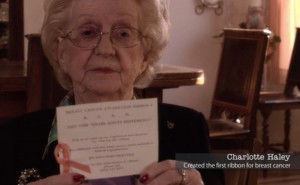
Charlotte Haley

Charlotte Haley in the documentary Pink Ribbons, Inc.

We celebrate the life of Charlotte Haley, creator of the first “breast cancer ribbon,” who died February 2, 2014 at the age of 91 at her home in Simi Valley, CA. She is survived by her three children Leslie, Nancy and Robert, five grandchildren, two great-grandchildren, and her sister Iris.

BCAction members may recognize Charlotte Haley’s story from the documentary film Pink Ribbons, Inc.in which she tells the often-overlooked tale of the first breast cancer awareness ribbon, which was not pink in color but peach.  

https://youtu.be/3QPZfcYTUaA

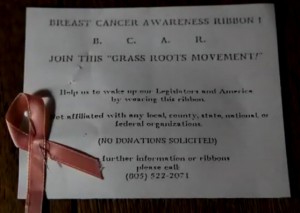
In 1991, Charlotte began hand-making peach breast cancer ribbons in her dining room. To each packet of five ribbons she attached a postcard that read: “The National Cancer Institute’s annual budget is $1.8 billion, only 5 percent goes for cancer prevention. Help us wake up legislators and America by wearing this ribbon.” Her ribbons were a call to action: a demand for prevention of this disease and greater accountability.

Charlotte Haley Breast Cancer Ribbon

Charlotte’s peach breast cancer ribbons were a call to action: a demand for prevention of this disease and greater accountability.

Haley was strictly grassroots, handing the cards out at the local supermarket and writing to prominent women, everyone from former First Ladies to Dear Abby. Her message spread by word of mouth. By the time Self magazine called asking if they could use her ribbon in their second annual “Breast Cancer Awareness” issue, Haley had distributed thousands of her peach-colored ribbons for breast cancer prevention.

A savvy marketing executive, Alexandra Penney, then the editor-in chief-of Self, and Evelyn Lauder, senior vice president of cosmetics company Estée Lauder saw the potential of a ribbon branded to breast cancer. But Charlotte told Self and Estée Lauder that she wouldn’t work with them – they were too corporate and commercial for her. Legal counsel quickly revealed that by changing the color from peach to pink, permission to use Haley’s idea wasn’t necessary. They chose a new color and the now iconic bubble gum pink we see adorning countless products every October was born.

Though Charlotte Haley’s peach ribbon has been eclipsed by its cheerful pink cousin, her grassroots activism and commitment to breast cancer prevention continue to inspire members of our community. At BCAction, we have always made a point to write Haley back into the history of breast cancer activism. We mourn her death and we applaud her independent grassroots activism and honor her dedication to taking action as a way to address the breast cancer epidemic.  

error: Content is protected !!